
[ad_1]
SINGAPORE — As China accelerates efforts to build its global power, President Xi Jinping has laid out an extravagant vision for overseas ethnic-Chinese communities that he hopes will “give shape to a powerful joint force for advancing the rejuvenation of the Chinese nation.”
China Global Leap
At every point of the compass, China is quietly laying the foundations of its new international order.
Promoting these communities as a vehicle for China’s geopolitical ambitions has become something of a mantra in Beijing, often wrapped in bland rhetoric like building a “shared future.” But in seeking to incorporate citizens of other countries into its vision, critics say, Beijing is stoking divided loyalties, and their potentially destabilizing consequences, across Southeast Asia — home to more than 80 percent of the ethnic-Chinese people outside China and Taiwan, researchers say.
Concerns are most pronounced in Singapore, a multiracial city-state with a majority ethnic-Chinese population that is increasingly sympathetic to Beijing. A 2022 survey of 19 countries by the Pew Research Center found that Singapore was one of only three that saw China and Xi in favorable terms. In June, the Eurasia Group Foundation released a survey conducted in Singapore, South Korea and the Philippines that found Singapore was the only one that viewed China more favorably than it did the United States. Fewer than half of respondents in Singapore viewed the United States favorably, compared with 56 percent who viewed China favorably.

“If too many Chinese Singaporeans are foolish enough to subscribe to Xi’s version of the ‘China Dream,’ the multiracial social cohesion that is the foundation of Singapore’s success will be destroyed,” said Bilahari Kausikan, a former permanent secretary of Singapore’s Foreign Ministry. “Once destroyed, it cannot be put together again.”
Singapore’s government passed a law to prevent foreign interference in domestic politics that went into effect last year, and has warned its ethnic-Chinese population against “hostile foreign influence operations” and stressed a distinct Singapore-Chinese identity. But messaging by the Chinese Communist Party (CCP) on key issues such as the role of the United States in the region and China’s internal politics is already entrenched in Singapore, including in a leading Chinese-language publication long backed by Singapore’s government.
The flagship broadsheet, Lianhe Zaobao, illustrates the shifting attitudes toward Beijing. Its reporting, once a reflection of Singapore’s careful neutrality between China and the United States, now routinely echoes some of Beijing’s most strident falsehoods, including denying evidence of rights abuses in Xinjiang and alleging that protests in Hong Kong and in mainland China were instigated by “foreign forces,” according to an examination of more than 700 Lianhe Zaobao articles through 2022 and early 2023 by The Washington Post and the Australian Strategic Policy Institute.
Additionally, the paper has been running regular opinion columns since 2016 from at least two CCP officials without noting their party affiliation, referring to them simply as China affairs commentators. One of the columnists, Deng Qingbo, directs the online propaganda and comment division of Hunan province’s cyberspace administration office, while the other, Ding Songquan, is part of the CCP’s committee at Huzhou College in Zhejiang province and has held several positions in the Zhejiang education department. Another columnist, Hong Kong-based Xing Yunchao, writes sometimes identical columns in the China Daily and Lianhe Zaobao, blurring the line between Chinese state media and the privately held Singaporean newspaper.
As part of its carefully calibrated neutrality between the United States and China, Singapore maintains extensive military and economic ties with Washington alongside its close economic relationship with Beijing. The city-state buys weapons from the United States and trains its military on American bases, while U.S. naval ships frequently make port calls in Singapore. Meanwhile, Singapore and China this spring formally upgraded their bilateral relationship after a visit by Prime Minister Lee Hsien Loong to China, bolstering a free-trade agreement, environmental collaboration and telecommunications exchanges.
Beijing sees Southeast Asia as a key sphere of influence, and it has been increasing its public diplomacy and media presence there as part of a multibillion-dollar campaign under Xi, with ethnic-Chinese communities a significant target, according to researchers. China’s legislature is set to pass a “patriotic education” measure that seeks to promote Beijing’s messaging and “Xi Jinping Thought,” including by harnessing the power of overseas Chinese groups, which should “play to their respective advantages,” according to a draft of the law. China’s messaging is twofold, designed to bolster its image and programs, while limiting Washington’s role in Southeast Asia by creating “the sense that the U.S. is dangerous, provocative and destabilizing,” said Chong Ja Ian, an associate professor at the National University of Singapore and a nonresident scholar at Carnegie China.
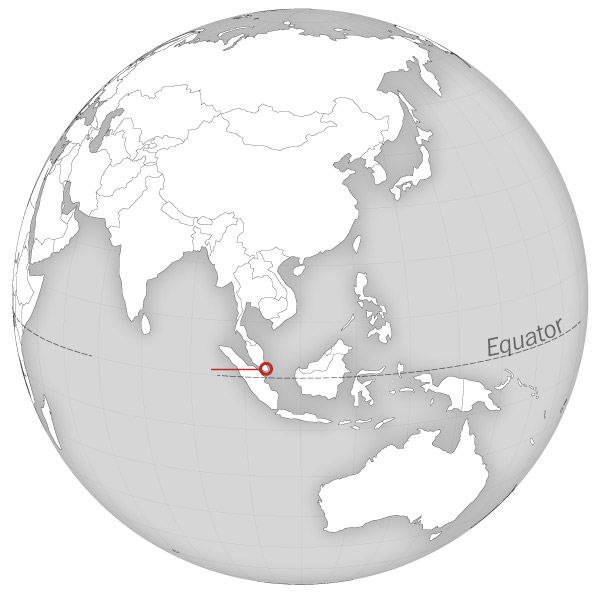
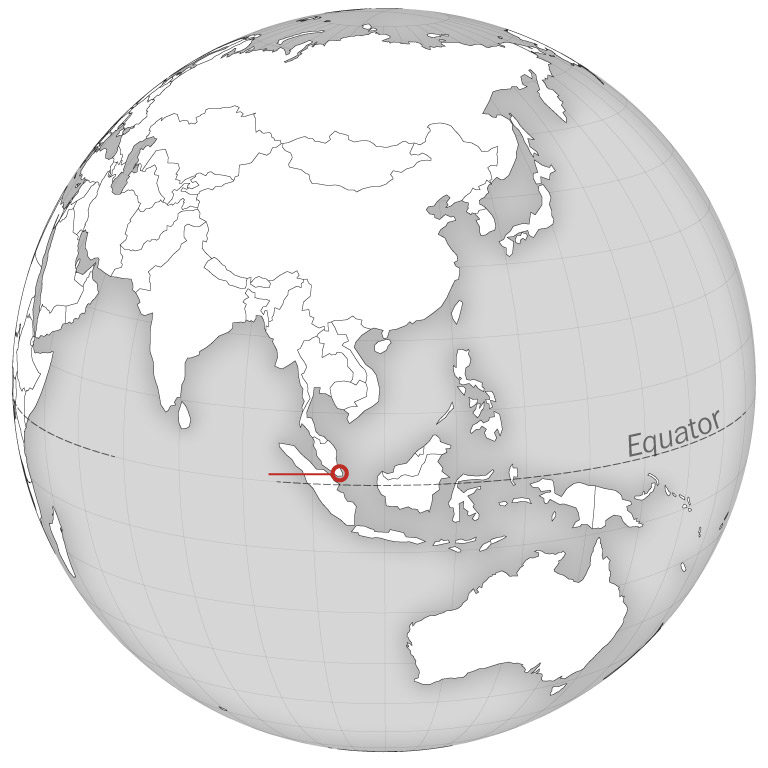
A map locating Singapore in Asia
Chinese state television in both Chinese and English is ubiquitous in Southeast Asia, as is China Radio International, which broadcasts in most Southeast Asian languages as well as Chinese. Beijing is also promoting its official news agency, Xinhua, to media organizations in the region, creating content-sharing agreements. Chinese companies or businesspeople with strong commercial interests in China have bought up local Chinese-language newspapers in Malaysia. This focus on traditional media organizations complements targeted disinformation campaigns on social media, with the goal of co-opting overseas Chinese communities “as vectors of influence abroad,” according to Albert Zhang, an analyst at the Australian Strategic Policy Institute’s international cyber policy center.

Apart from these direct efforts, the sheer weight of China’s economic power has become an incentive to heed Beijing’s wishes, undermining traditional constraints in Singapore on taking sides. Lianhe Zaobao, for instance, enjoys rare access for a foreign publication to audiences in China, and it has become dependent on that readership for advertising and growth. The newspaper’s leadership is loath to risk being shut out of the Chinese market by the country’s censors and has prioritized access over critical coverage, according to interviews with 10 former and current reporters who, like others, spoke on the condition of anonymity to discuss issues freely.
Financial incentives also exist at smaller online outlets that rely on Chinese social-networking apps like WeChat for readers and advertising. An editor at an online Chinese-language outlet in Singapore admitted to self-censorship — avoiding political topics while pushing messaging that would be favorable to China — to preserve access to the app. Getting blocked is a “double cut,” the editor said, affecting both readership and advertising.
Lianhe Zaobao’s editor, Goh Sin Teck, in response to questions from The Post, said that his newspaper is “objective, neutral and fact-based” and that content is not selected based on political leanings. The opinion section, Goh added, is meant to cover “a broad spectrum of views,” and the paper does not “want to discard certain views out of hand solely based on the columnist’s background.” The newspaper’s official positions, he said, are carried only in its editorials.
“As far as possible, Lianhe Zaobao verifies the background of all writers, while respecting how they wish to describe themselves,” Goh said. On the paper’s reporting, he added: “Indeed, we may not be dancing to the West’s tune when we report on certain topics. But to categorize us as a pro-CCP media because of this seems to be overly rash and arbitrary.”

‘One newspaper, two countries’

Lianhe Zaobao was created in 1983 by the merger of two rival Chinese-language newspapers, a consolidation that was encouraged by Singapore’s first prime minister, Lee Kuan Yew. Lee was worried about the future of Chinese-language newspapers as English became the medium of instruction in schools. It is in Singapore’s “interest as a nation to maintain at least one high-quality Chinese-language newspaper, and that paper is Zaobao,” he said in a 2003 speech celebrating the paper’s anniversary. “This is a national project which we must do our best to promote.”
The paper is one of three main vernacular newspapers in Singapore, each serving a predominant ethnic group — Chinese, Malay or Indian. The majority of Singapore’s 5.4 million people are bilingual, proficient in English and one other language: Mandarin, Malay or Tamil.
Lianhe Zaobao was unusual in that it served two audiences — in Singapore but also in China. As China began to open under the leadership of Deng Xiaoping in the 1980s, Zaobao’s reporting and commentaries were reprinted and circulated among higher-ranking CCP cadres. In 1993, the newspaper became available in Beijing hotel bookshops, and it went online two years later. It remains one of the few Chinese-language foreign-news websites accessible in China.
“We call it ‘one newspaper, two countries,’” said Lim Jim Koon, the paper’s former editor in chief, who spent more than three decades at Zaobao until retiring in 2011. “We know our value to China is that we offer something they don’t have. … We become a window for them.”


Even as the paper’s footprint in China grew, its readership steadily declined in Singapore in tandem with falling Mandarin proficiency, especially among the young. The paper has tried to attract a new digital audience — pushing video content and Facebook Live presentations as it establishes a brand with content created by millennials and Gen Zers — but its subscriber base has continued to dip. Zaobao’s combined print and digital circulation in Singapore fell from 187,900 in 2015 to 144,000 in 2020, according to company filings.
Amid falling revenue across the industry, Zaobao’s parent company, Singapore Press Holdings, in 2021 spun off its media business, including the English-language Straits Times and other vernacular papers, into a privately held trust, SPH Media. Circulation figures and other financial records are no longer available to the public.
Access to the Chinese market has become crucial for the publication. Zaobao has over 4 million monthly readers in China — almost twice the number of Mandarin speakers in all of Singapore, according to census data — and that access is monetized through advertising and paid advertorials from Chinese and other companies seeking to reach Chinese consumers, according to the reporters.
Zaobao still holds significant influence in Singapore, in part because of its historically close relationship with the government, which has long exercised tight control over the local media. Celebrations marking the paper’s anniversaries feature high-level Singapore officials, including the current prime minister. The newspaper also rates well on trust among readers, according to the Reuters Institute. Despite falling readership, SPH Media continues to have a monopoly over print news in Singapore.
The Zaobao reporters say a clear shift toward Beijing accelerated in 2019, when at the height of protests in Hong Kong, the newspaper’s main WeChat page was blocked. It remains inaccessible. The reason is unclear, but it was interpreted as a warning that other social media sites — including Zaobao’s account on Weibo, the major Chinese social media platform, and the Zaobao website itself — could be blocked. The version of the newspaper’s website in China is different from the one accessible in Singapore, and editors withhold sensitive stories from the Chinese version, according to several reporters.

Avoiding being blocked in China became the main priority of the newspaper’s senior leadership, according to several current and former reporters. “It underlines everything we do,” said one journalist at the paper. Protecting that access has spilled into the paper’s editorial direction more broadly, including its reporting for Singaporean readers, the reporters said. “We are doubly trapped,” between Singapore’s censorship and China’s, the journalist at the paper said.
In December 2021, the newspaper was granted an exclusive interview with Chinese tennis star Peng Shuai. Peng had said on her Weibo account that a former top CCP official had pressured her into sex; then she disappeared from public view. The six-minute Zaobao interview, in which she denied being sexually assaulted and said she was living freely, is the only time Peng has been seen or heard from directly since she posted the accusation. Some reporters said they believed the paper was handpicked to promulgate the party line, and that it was seen as more likely to be trusted by global audiences than a Chinese state media outlet.
It put “Zaobao in the light of helping the CCP say things,” said a former reporter. “It was that moment where you could see how the Chinese government allowing access to foreign media — because it is so few and far between — and Zaobao priding itself as a diplomatic channel and interpreter of Chinese thinking overlapped.”
More recently, the paper deferred to Beijing’s narrative on topics including last year’s “blank paper” protests against covid-19 lockdowns and CCP rule, as well as in coverage of the Chinese surveillance balloon shot down by the United States in February, in which stories routinely implied that the American reaction was irrational and a symptom of decline.
Zaobao also partners with a Chinese company that has been pinpointed as complicit in rights abuses. In late 2022, Zaobao started working on digitization efforts with an artificial intelligence firm called SenseTime, which has been placed under sanction by the U.S. government for the use of facial recognition technology against the Uyghur ethnic minority. Goh, Zaobao’s editor, said the partnership is a one-year arrangement “designed to explore ways of using AI technology to improve visual content presentation and user experience,” adding that Zaobao “has no wish to be embroiled in U.S.-China contests.”
“The Beijing-friendly impression Lianhe Zaobao gives its readers might … lead the Chinese audience to believe Singapore is more PRC-friendly than is justified by its U.S.-centered security policy,” said Sense Hofstede, a research fellow at the Clingendael Institute in the Netherlands, using the initials of the People’s Republic of China.
A distinct Singapore-Chinese identity

The changes within the paper come as a new Chinese ambassador to Singapore is more publicly pushing Beijing’s agenda. Sun Haiyan, who received her credentials in 2022, arrived from the International Liaison Department, a wing of the CCP that manages relations with political parties, rather than the Foreign Ministry. Soon after taking up her position, she established an “AmbChina.sg” Facebook page. She posts there at least once a day.
The Post reviewed all her public posts in 2022 and they overwhelmingly show her engaging with Chinese Singaporeans, Chinese-language media and Chinese associations over other ethnic groups. Among Sun’s first engagements was a meeting with a group of Chinese-language online outlets where, according to an editor present, she asked that they steer clear of sensitive topics, including China’s actions in Xinjiang and Tibet, where the United Nations found evidence of wide-ranging human rights abuses and forced assimilation. Sun told an editor at SPH Media, Zaobao’s parent company, that it should help tell positive stories about China, according to a person familiar with the exchange.
Propagating a pro-China line that “doesn’t distinguish between the Chinese Communist Party state, Chinese culture, Chinese ethnicity” creates “confusion over self-identification and where loyalties should lie, especially at a time where friction between the PRC, the U.S. and other U.S. friends and allies in the region are increasing,” said Chong, of the National University of Singapore.
In a written response to The Post, the Chinese Embassy said it respects Singapore’s multireligious and multiethnic society, and is in “regular contact with a diverse array of local communities,” citing relationships with Indian and Malay lawmakers. “Public relations and media affairs constitute an important part of the works” of Sun, the embassy said.
Lianhe Zaobao reported Saturday that Sun would be leaving her post at the end of the month for a promotion to deputy minister at the International Liaison Department. She would be the youngest deputy minister within China’s external affairs apparatus. The Chinese Embassy in Singapore did not respond to a request for comment on her departure or new role.


Singapore’s government has scrutinized Sun’s outreach, according to several people familiar with the matter who spoke on the condition of anonymity because of diplomatic sensitivities. The government is also increasingly concerned about China’s influence more broadly. Speaking to a clan association — one of the organizations set up during British rule to support Chinese immigrants — at a Feb. 5 reception marking the Lunar New Year, Home Affairs Minister K Shanmugam urged the group to help nurture a “Singaporean Chinese culture so that our people remain rooted. … Help the government ensure Singapore’s policies can only be decided by Singaporeans.”
Shanmugam’s appeal was an unusually pointed statement from a government that is often circumspect on China so as not to upset ties with Beijing. It followed the prime minister’s Mandarin speech at last August’s National Day rally, where he said messages shared on social media — he named WeChat alongside WhatsApp and Telegram — have the “ulterior aim” of persuading Singaporeans to take sides.
Yet some Singapore Chinese groups are being pulled closer into Beijing’s orbit. Representatives of three clan associations — including Teochew Poit Ip Huay Kuan, one of the largest — attended the 10th Conference for Friendship of Overseas Chinese Associations in May, the first such conference held since the pandemic. Other Singapore groups, such as the Sian Chay Medical Institution, a charity, and the Singapore-China Business Association, also attended, alongside some 500 overseas Chinese from 130 countries. They were greeted by Xi and Shi Taifeng, head of China’s United Front Work Department, which coordinates Beijing’s influence operations. State media billed the event as helping to “knit the giant Chinese family together.” The Singapore groups that attended the conference did not respond to requests for comment.
Researchers say such conferences are part of China’s overall “United Front” strategy, in which political work is promoted by nonstate actors with the goal of pushing CCP views, discrediting opponents and gathering intelligence. Shi, speaking to attendees, emphasized the “unique advantage” that overseas Chinese have in contributing to the “greatness of the Chinese nation.”
“A lot of United Front appeals cross over to an appeal to Chinese ethnic nationalism,” said Gerry Groot, a senior lecturer at the University of Adelaide in Australia who does research on United Front work and the role of overseas Chinese in advancing it. Friendship “associations are designed to build emotional links to China on the one hand, and allow the United Front department to use those emotional and other connections as levers to serve the goals of the Communist Party, whether economic, political or social.”
Elderly Chinese, who were Mandarin-educated and feel as if they’ve lost their place in a Singapore that is largely Anglophone, are the most easily swayed by Beijing’s messaging, analysts and residents said. One person who describes her parents, in their 70s and 80s, as having “extreme” pro-China views said the CCP has become like a “fictional hero.”

“Being a Chinese national became their whole identity, though it isn’t even their identity,” she said.
A spokesperson at Singapore’s Ministry of Communications and Information said in an emailed response to The Post that the city-state “does not choose sides between the United States and the People’s Republic of China, but upholds consistent principles.” An internal government poll, the spokesperson said, found that 86 percent of Singaporeans agreed with the policy of nonpartisanship, with only 4 percent saying the country should lean toward China.
Singapore has intensified its efforts to reinforce the Singapore Chinese identity. A nonprofit organization, the Singapore Chinese Cultural Center, was established to strengthen local Chinese culture, with an Instagram-friendly permanent exhibition that celebrates local cuisine, dialects and traditions separate from China. It is largely funded by the Singapore government.
“We were set up with a very specific purpose in mind, which is to aim to highlight the distinctiveness of the Chinese culture and Chinese community in Singapore,” Low Sze Wee, the center’s chief executive, said in an interview. “We do share a common ancestry with the people of China, but it is quite clear that despite this common history, many of us in the community have evolved [along] different trajectories.”

Carmen Yow and Rebecca Tan in Singapore and Pei-Lin Wu in Taipei, Taiwan, contributed to this report.
About this story
[ad_2]
Source link